


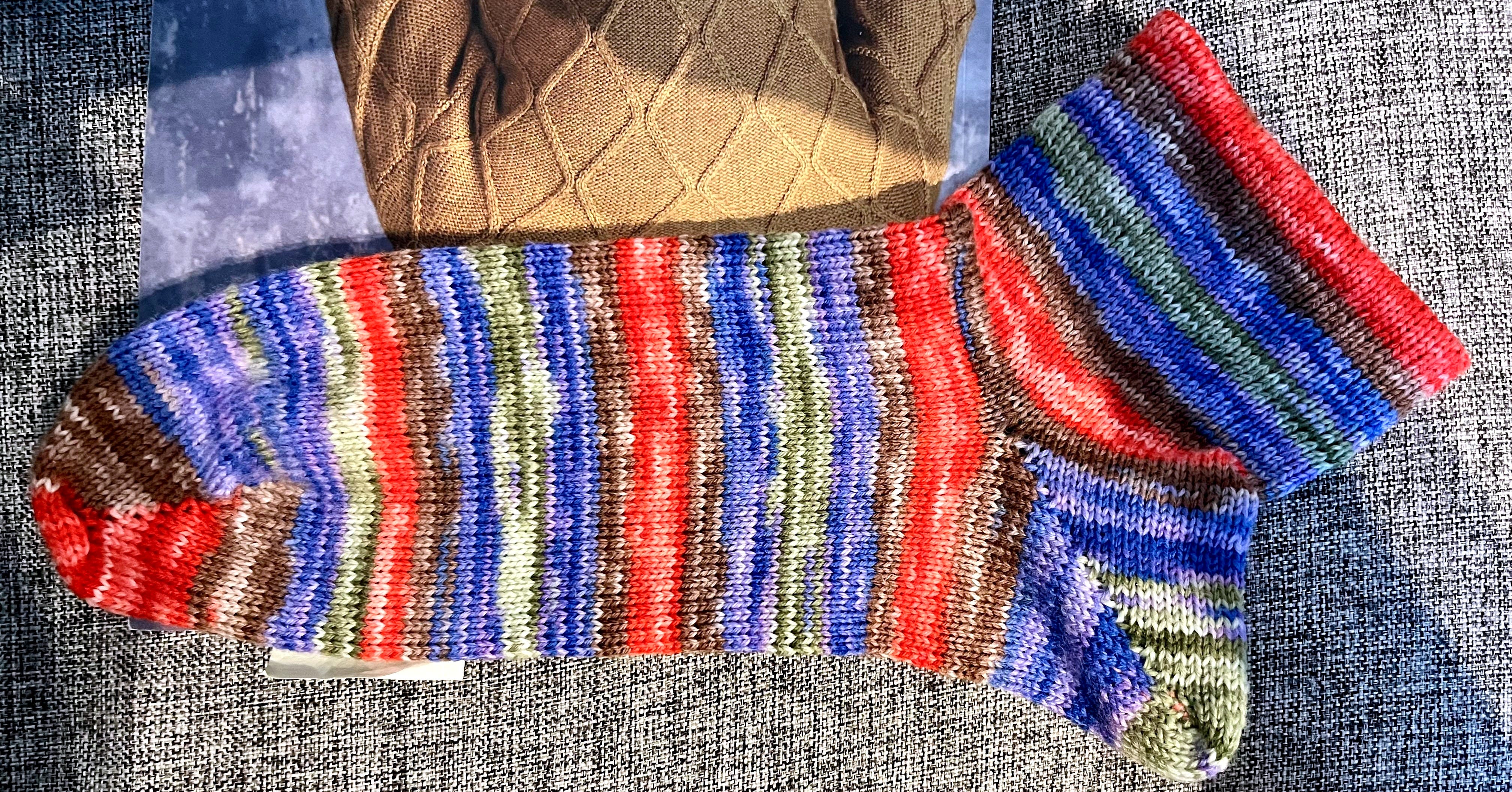
I have knit a lot of socks by hand, both cuff-down and toe-up. Over time I have tried most of the common heel constructions: heel flap and gusset, short row, afterthought and instathought (peasant) heels, Fleegle, and a few others. My toes, however, have almost always been wedge-style: four increases or decreases at the sides of the foot, finished with grafting for cuff-down socks or begun with Judy’s Magic Cast On for toe-up.
Since I started making socks on my flatbed machine, I noticed that most machine knitting patterns use a short row toe as well as a short row heel. This makes complete sense on a machine, where short rows are much faster and easier than decreases. Seeing these instructions reminded me that short row toes are equally possible in hand knitting, yet they do not seem especially popular.
In this post, I will explain how to work short row toes for both toe-up and cuff-down socks and suggest modifications for a more rounded shape. I will also look at why they are not more widely used, despite their advantages.
Why Short Row Toes Work
First, consider how a standard cuff-down wedge toe works. You make four decreases every other round until you have roughly one third of the original stitch count remaining, then graft the ends together. This creates a trapezoid-shaped pocket that conforms to the shape of the foot when worn.
If you have ever knit an afterthought or peasant heel, you may have noticed that the shaping process is identical to a wedge toe. In a toe, this shaping reduces the circumference of the sock as the foot narrows. In a heel, the same shaping increases the circumference around the widest part of the foot and introduces the angle that allows the fabric to transition from ankle to foot.
Short row heels can also replace peasant-style heels, producing a heel that is effectively identical in shape to one made with decreases. From this, it follows that the decrease-based shaping at the toe can equally be replaced with short rows.

Toe-Up Construction
For toe-up socks, begin with a provisional cast-on for half of the total stitch count. For a 64-stitch sock, this means casting on 32 stitches provisionally. Any provisional method works. A crochet provisional cast-on is the most common, but Judy’s Magic Cast On can also be used provisionally.
From there, work the toe exactly as you would a short row heel, using your preferred short row method: wrap and turn, German short rows, yarn-over short rows, or shadow wraps. Once the toe is complete, pick up the live stitches from the provisional cast-on and join in the round.
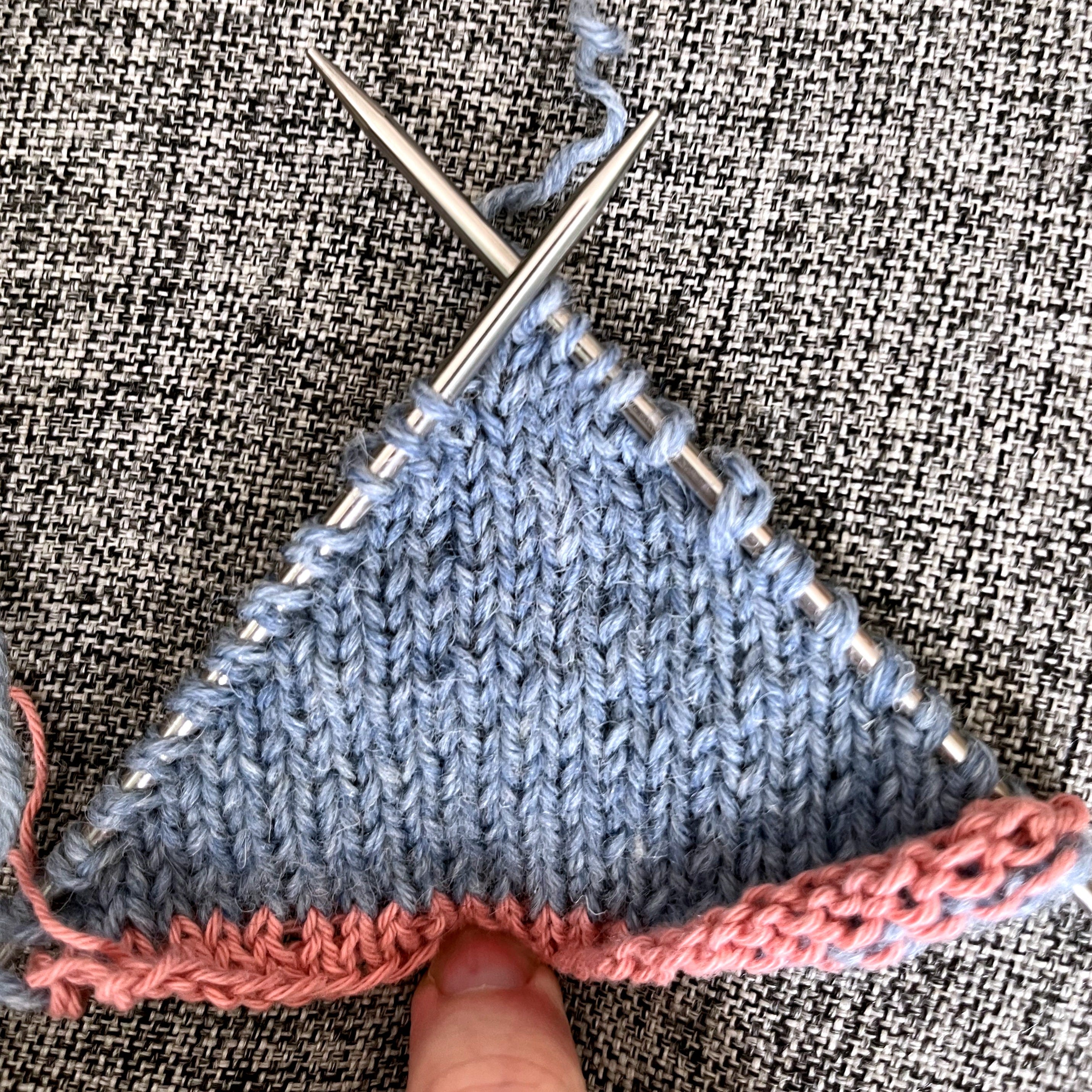
This approach is intuitive if you already knit short row heels. There is no new technique to learn, only a different starting point in the sock. It also appears to have been more common before 2006, before Judy’s Magic Cast On was popularised. For knitters using DPNs or short circular needles, this method avoids switching to magic loop, which is often required for the initial rounds when working toe-up. It also eliminates grafting, which many knitters are happy to avoid.
The main drawback is the provisional cast-on itself. Some knitters find it fiddly, and if you already use Judy’s Magic Cast On comfortably, the short row toe may not feel like a compelling alternative.
Cuff-Down Construction
For cuff-down socks, knit the foot to the point where the toe begins, then place half of the stitches on hold. This can be either the instep stitches or the sole stitches. The remaining stitches are worked back and forth in short rows, exactly as for a short row heel. Once the toe shaping is complete, graft the toe stitches to the held stitches.
One practical advantage is that, if you are using short circular needles, you can complete the entire sock without switching to DPNs or magic loop. You can stay on the same needles from cast-on to graft.
Grafting is not eliminated, only moved. With a cuff-down short row toe, the graft runs across the full stitch count rather than the smaller number used in a wedge toe. This can make it harder to achieve even tension, so it is worth practising before using this method on a finished sock.
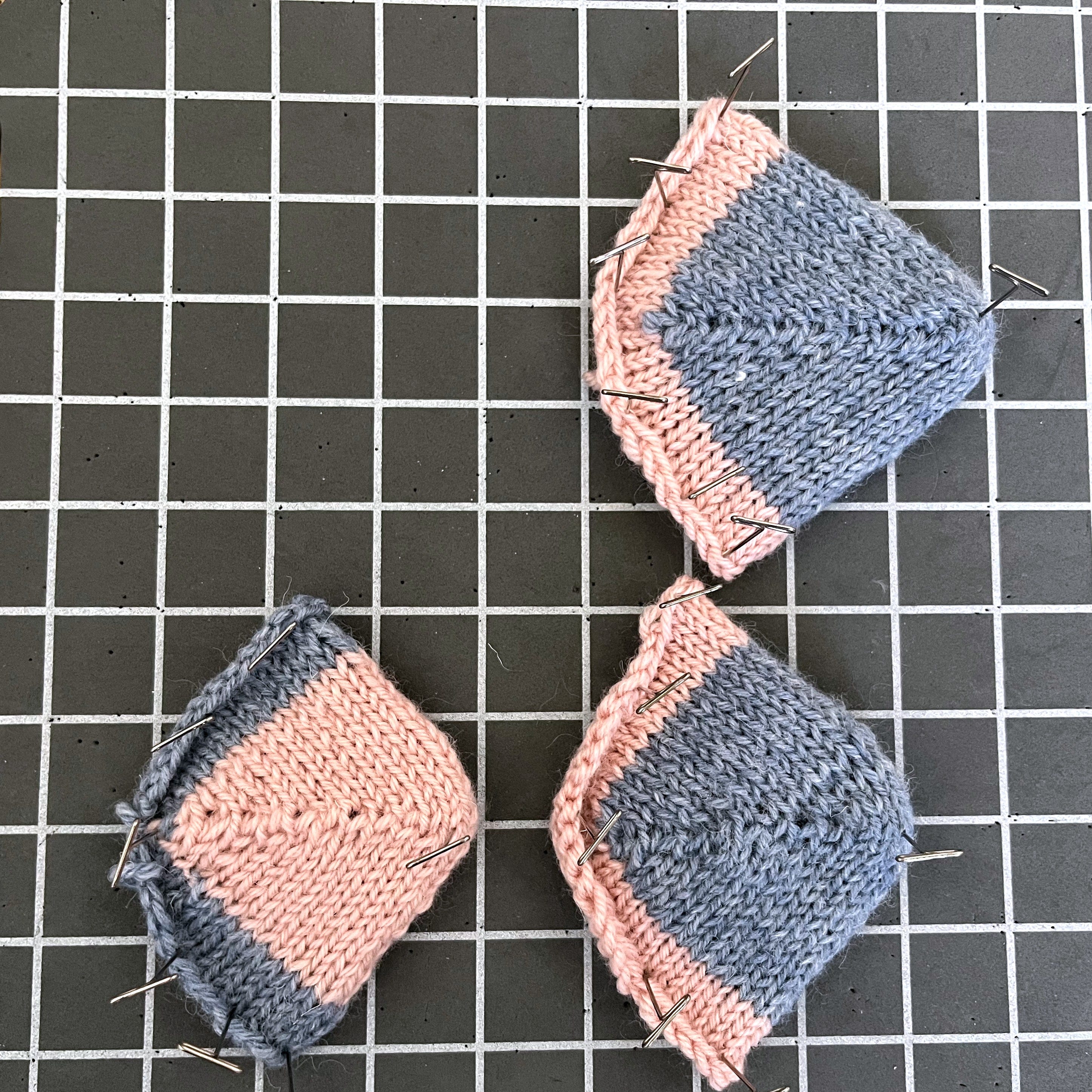
Modifications: A Rounder Toe
Some knitters find a standard short row toe, like a standard wedge toe, slightly too pointed for their foot shape. With decrease-based wedge toes, a common adjustment is to work decreases every other round for the first half of the shaping, then every round for the second half. This produces a noticeably rounder result.
A similar adjustment works for short row toes. In the later stages of the shaping, instead of turning one stitch before the previous turning point, turn two stitches before it. This subtly increases the rate of shaping at the tip and produces a rounder toe.

Closing
Short row toes are not a better method, just a different one, and knowing them gives you more options. They are particularly useful if you already knit short row heels, if you work on short circular needles, or if you want to avoid closed cast-ons for toe-up socks. For cuff-down socks, they are a reasonable alternative to a wedge toe, with the trade-off that the graft is longer.
I ended up exploring them more after getting into machine knitting, where short rows are the default for both heels and toes. That experience nudged me to revisit the technique in hand knitting, and from there I started experimenting with stripes. With a short row toe, stripes can curve around the toe in a way that resembles intarsia, without the bother of multiple bobbins. It is something I have been developing and may turn into a future pattern.
Whether any of this makes short row toes worth trying depends on what you already do and what you find fiddly. In sock knitting, it is always good to mix things up, but in the end the method that makes you happy is the right one.
I always work row heels and I worked short row toes on a few pairs of socks as well because of their shape, like you said. I have never tried it while doing toe-up, thanks for the suggestion. One reason they are not as popular is maybe the need to graft many more stitches than a conventional toes?
Why bother with a provisional cast on? Cast on the total number of stitches for the sock with JMCO on two needles . For me, this is 64, 32 on each needle. Knit one round across both needles. When you return to the start of the first needle, begin your short row toe. Construct it exactly as you do a short row heel. I use a shadow wrap method. When you complete the short row pattern, simply resume knitting in the round on the second needle. I have knitted dozens of toe-up socks in this fashion. No grafting, no provisional cast on.