


A few months into spindle spinning, I’ve gone from putting the drop firmly into drop spindle to something closer to confident, on both a drop spindle and a supported one. When it’s going well the whole process is meditative, almost trance-like. I can sit for hours just drafting fibre, and the supported spindle especially has a range of movement to it that feels more like a dance than a craft.
Even so, I couldn’t quite ignore the pull to produce more, faster. I’ve been working my way through a sample box of naturally coloured breeds, and the 21g of Dorset Horn I recently finished on my supported spindle took about 2 weeks of evening spinning sessions to spin and ply. The finished 2-ply was fine, working out to around 500 m per 100 g, and the thought that a pair of socks in that weight would take me 10 weeks to spin was more than a little daunting.
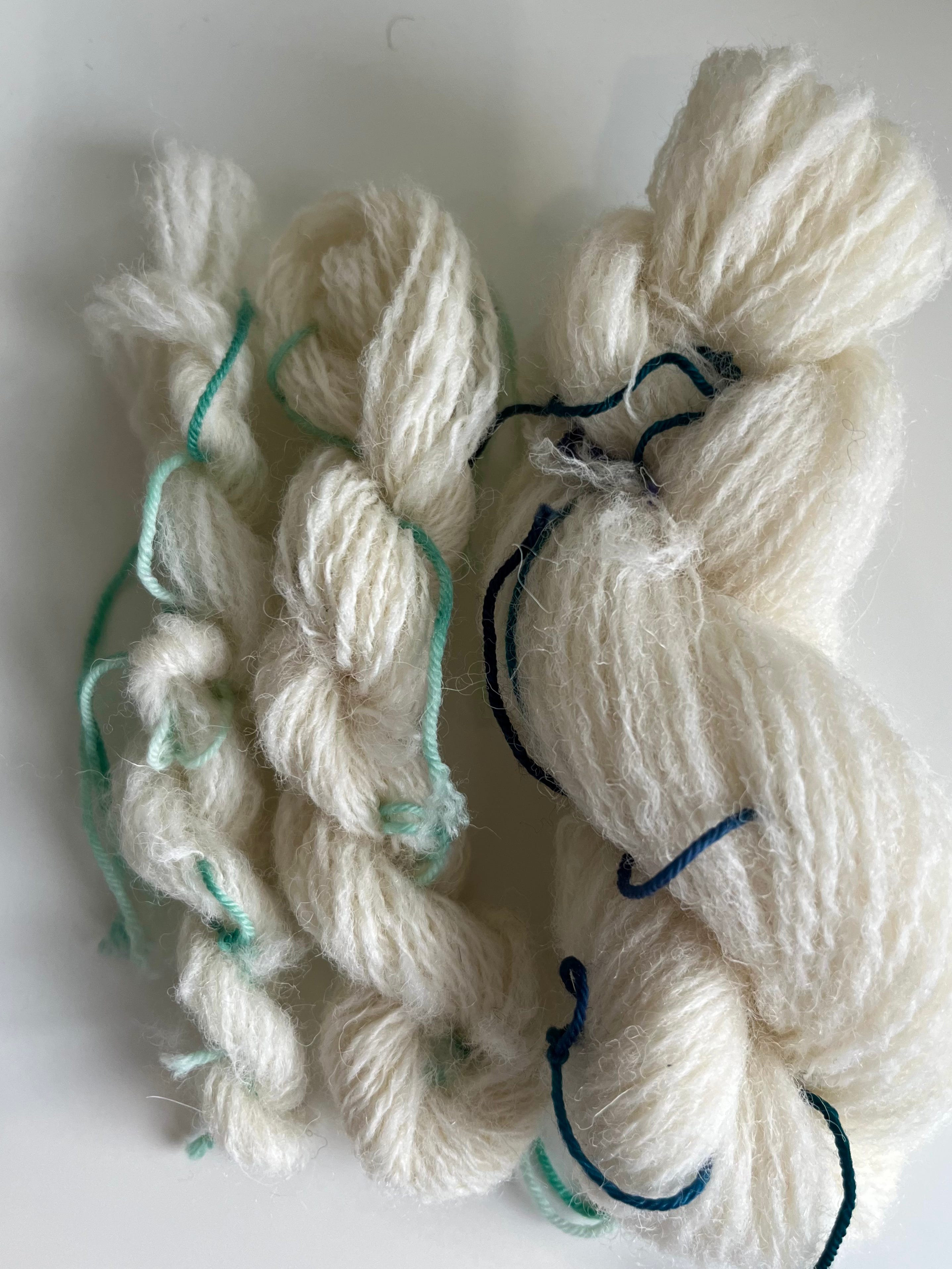
Granted, spinning has to compete for time with work, chores, other commitments, and my other hobbies, knitting and crochet chief among them, so those 2 weeks weren’t solid spinning either. I’m sure my speed will pick up with more practice. But getting my hands on a wheel became something I couldn’t put off any longer.
A look online turned up around a dozen secondhand wheels in my area, most well over 100 years old: typical Nordic flax wheels, probably stored away in a family cottage for decades. There was an Ashford Traditional for around €400, a 30-minute drive away, and a Rappard Wee Peggy for €330, just 5 minutes down the road.
I’d never heard of the brand, or the wheel, before. Rappard wheels, I learned, were built in Dunedin, New Zealand, their design evolved from Shetland wheels that early settlers brought over with them, and the Wee Peggy was sold as a kit set in the 70s and 80s specifically so it could be posted anywhere in the world and assembled on arrival. This one had well cared for wood, an intact flyer, 4 bobbins, and a built-in lazy kate. I bit the bullet, and 2 weeks ago I became the owner of my first spinning wheel.
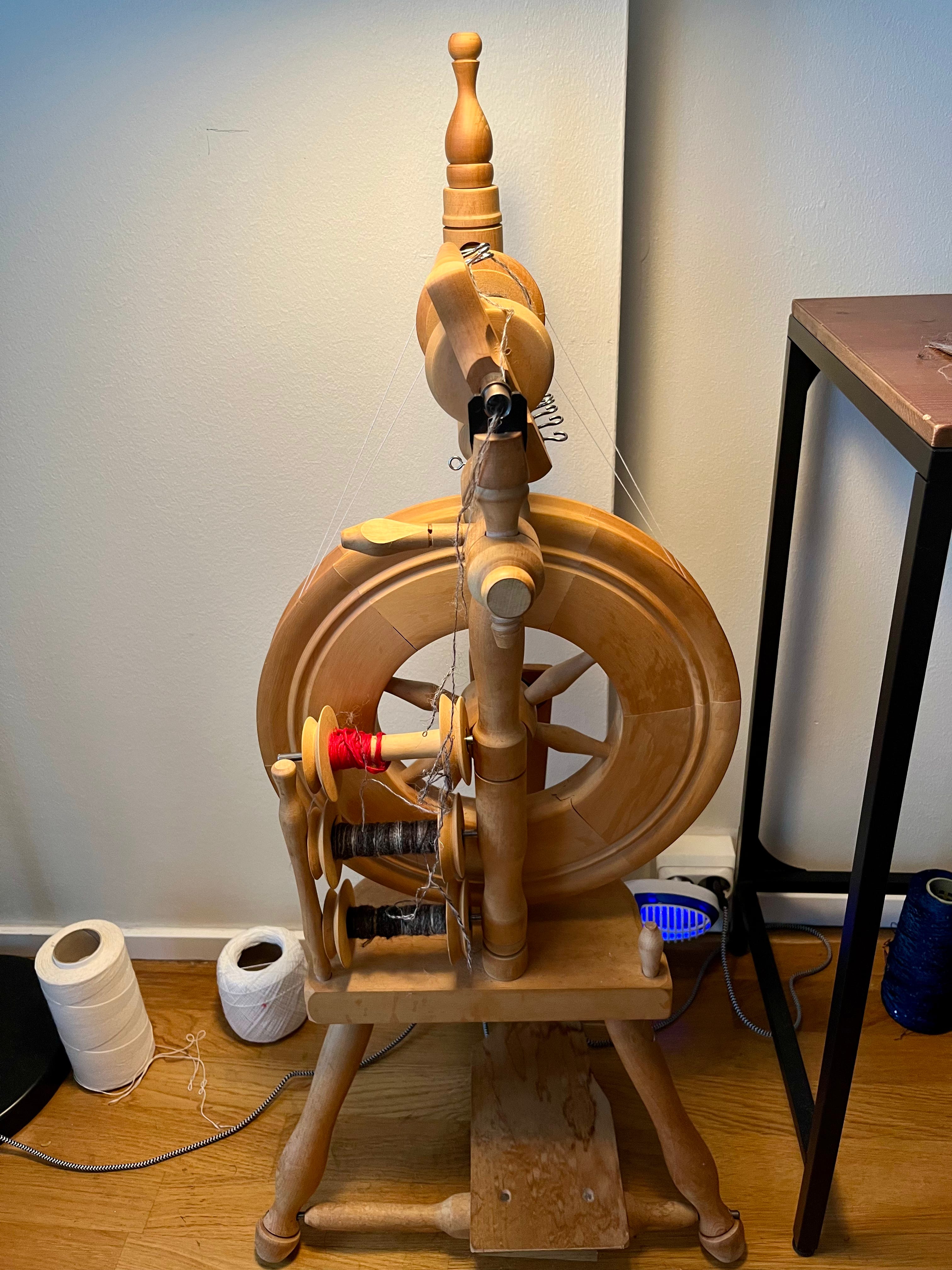
Now that I’ve got a wheel of my own, it’s strange to think that spindles were the only way to spin for thousands of years, and that even the earliest spinning wheels still needed a separate motion to wind the spun yarn on, stopping and starting the whole time. That changed with the flyer, the part that spins and winds at once, the same basic mechanism the Wee Peggy still uses. Historians have trouble pinning down exactly when it first appeared, since spinning technology tends to spread long before most people actually adopt it, but by the 16th century treadle wheels built around a flyer were common enough to earn their own names: the Saxony wheel, the flax wheel. Not having to stop to wind on must have sped things up considerably. Whatever that jump in production felt like at the time, it must have been enormous.
